AFRICA THOUGHT
– News features, commentaries, analyses, interviews & Op-ed.
Reserved for subscribers
By Caleb Onyeabor/An Analysis
The last presidential elections in Nigeria have lived up to the hype as the most competitive, intriguing and interesting election in Nigeria since the return to democracy in 1999. The candidate of the APC polled 8,794,726 to win the three horse race against Atiku Abubakar, the candidate of the major opposition party PDP who polled 6,984,520 votes and the underdog candidate of the Labour Party, Peter Obi who polled 6,101,533 votes.
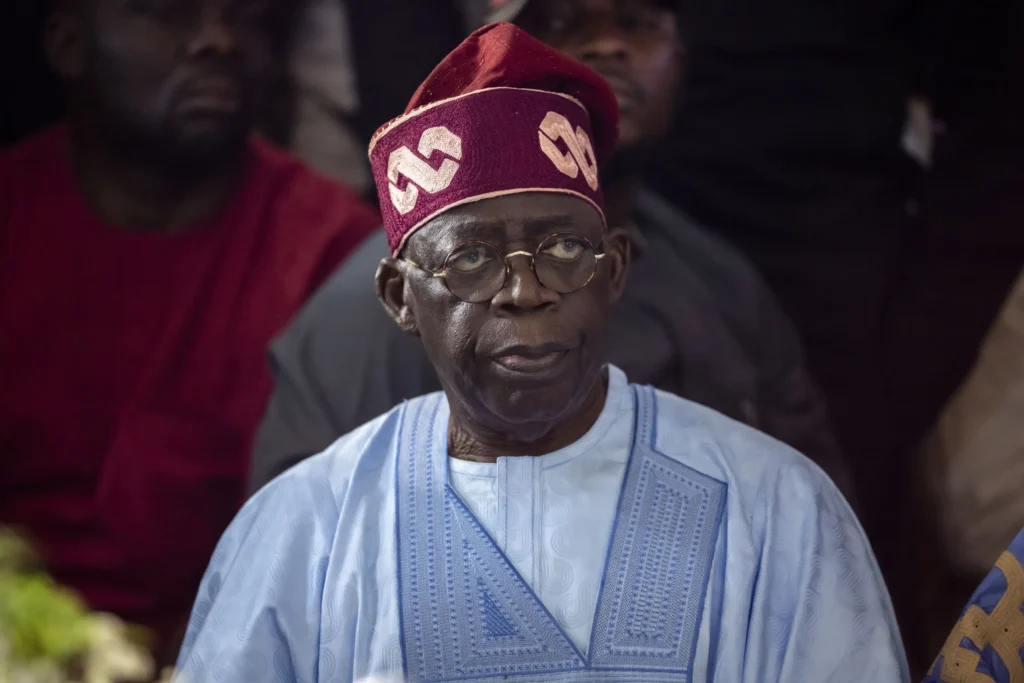
Bola Tinubu might have won the battle but the data from the elections and the post elections atmosphere and events surrounding his victory suggests that the war is far from over.
From being the most ridiculed and trolled candidate in the campaigns where his age, health, mental state and choice of same faith ticket was questioned, it appears that though victorious in the election, Bola Tinubu still has to win the war of legitimacy among the generality of Nigerians.
The importance of legitimacy of an administration is an important ingredient in every democracy. It is not enough to win majority votes, a victorious candidate must have wide acceptance to ensure a smooth running of his administration.
It appears clearly that Bola Tinubu will face a serious crisis of legitimacy. Firstly, this is one of the elections in the country where the announcement of a candidate did not elicit mass celebrations. The news of Tinubu’s victory was greeted with such coldness – the mood of a people in mourning. Even his own vassal which is Lagos State, the mood was sombre. The moments leading to his declaration as winner contributed to framing the process through which he emerged as fraudulent. There was a widespread report of voters suppression especially in key battle states like Lagos and Rivers State.
The alleged failure of INEC staff to ensure electronic transmission of results sent a wrong signal as the same officials were able to transmit elections results for the senatorial and house of representatives elections held on the same day. The gubernatorial and state assembly elections held weeks later had INEC officials comply with electronic transmission of results, a move that strengthened public opinion against the election of Tinubu with questions over why electronic transmission of results worked in all other elections except in the presidential election.
The allegations in international media outlets about the conviction of Bola Tinubu over drug trafficking-related offense has proven to be the most egregious. And this has strengthened the narrative by opposition about Tinubu being a drug baron.
A more scientific pointer to the crisis of legitimacy that Bola Tinubu will face as President is the election data. Out of 24.04 million valid votes cast, Bola Tinubu scored 8,794,726 that is an estimated 36.55% of total valid votes cast in an election that has the lowest voters turnout in Nigeria’s history. This is the first time in Nigeria’s presidential election that the number of people who voted against the winner are almost twice the number of people who voted for the winner. The implications of this in the data is that the number of people who do not want Bola Tinubu to be President are more in number than the people who want him to be President.
In Tinubu’s own Lagos, he lost. He was defeated by the candidate of the Labour Party who polled 582,454 against Bola Tinubu who got 572,606. The dominant reaction among members of the public is that Bola Tinubu only managed to get that number through the use of suppression, manipulation, thugs and state officials. Even though he was defeated at his home turf, the public believes that the margin ought to be far higher than what was announced. The interpretation of this is that even on his home turf, the people who don’t want him to be President are far higher than the people who want him to be President.
There were also reports about Tinubu’s original state of origin in spite of his control and overarching influence in Nigeria’s dynamic commercial capital. Tinubu is said to hail from Sun Statewhere he was also rejected at the polls. The candidate of the major opposition party, People’s Democratic Party (PDP) won in Osun State with 354,366 against Bola Tinubu’s 343,945. This is the first since 1999 when the winner of the presidential election in Nigeria lost an election in their home state. Again, the interpretation of this data shows that even his own people did not want him.
Although the APC won 12 states, PDP won 12 states and LP won 12 states including the FCT while Rabiu Kwankwaso of the NNPP won in Kano state, Tinubu’s choice of Shettima, a Muslim from Borno state and their same faith ticket have pitched them against about half of the Country’s population who are Christians. Perhaps, the biggest crisis of legitimacy that Tinubu will face is from the Christian population in the country. This is evident in last minute efforts by Bola Tinubu and his men to convince Nigerian Christians to accepting him as president. A look at the election data also shows that he lost in the majority of towns dominated by Christians as a protest vote of his decision to jettison the religious sensitivity of the country.
Another look at the election data shows that Bola Tinubu failed to win in the majority of the metropolitan and most urban places in Nigeria. He lost in Lagos, he lost in Kano – the two most populated states in the country. His predecessor won in these two. He lost in Kaduna, lost in Delta, lost in Enugu, lost in Cross River, lost in Plateau and even lost in the Federal Capital Territory where he did not get 25% of total valid votes cast. Perhaps the only big place he won was Oyo state and the controversial Rivers State. The results of Rivers State have also dealt an uppercut to his victory as independent investigators such as online publication, Premium Times and the BBC have found out that the candidate of the Labour Party and not Bola Tinubu, actually won in Rivers state if proper calculations of votes in the INEC result portal is done. Bola Tinubu’s failure to win convincingly in any of these major cities in the country shows a loud rejection by the most urban dwellers who make up a huge chunk of the electorate. Most often, the opinion of rural dwellers opt for silence and indifference.
Equally notable Bola Tinubu’s victory at the polls will perhaps go down as the most challenged electoral victory since 1999. There has been a flurry of law suits seeking to stop his inauguration as president. One by the PDP and another by some FCT residents.
Added to this is the fact that Bola Tinubu did not win a single state in the South East. Except for the obviously controversial Rivers State results, he did not win any also winning any of the South South states. In the South West, the same fate befell him including the devastating defeat in his own domain – Lagos State.
Either way, Bola Tinubu should prepare to face a crisis of legitimacy in all these geopolitical areas.
His saving grace came from the core North where he won in North Central and North West States where his acceptance still hangs on a thin thread. Any bad move could easily turn the tide against him since the electorate in that region feel that Tinubu owes his victory to them. They will be expecting a Tinubu presidency to woo them and expect an entitlement to a quid-pro-quo deal.
Internationally, Tinubu has his job caught out for him. He will to engage an aggressive diplomatic make-over to win the support and endorsement of his presidency. Already, there has been diplomatic shuttles around the world by Tinubu aides aimed at gaining acceptance abroad.
In response, the Bola Tinubu team has launched several attempts to gain legitimacy. For instance, several top religious and traditional leaders have been ‘recruited’ to convince their followers and subjects to accept a Tinubu presidency. We have it in good authority that a phone bank has been set up primarily to appeal to aggrieved Nigerians to give Tinubu a chance to run the affairs of the country.
Finally, Bola Tinubu and his administration must have to work doubly hard to win the heart of Nigerians. And he has 100 days in office to do this or there is likely to be unease inside Nigeria’s Presidential Villa – Also Rock. The battle for the election may have been won but the war is far from over.
Newsletter
Subscribe to our bi-weekly newsletter and be the first to Receive New Updates.
Your comments, ideas, and thoughts matter.
Drop us a line: