ARTS, CULTURE & LITERATURE
This is YOUR space for creative works shaping the African and Black global experience featuring what is new and what is happening in arts, culture and Literature of Africans, African-Americans and the rest of the Black World.


By Favour Ike
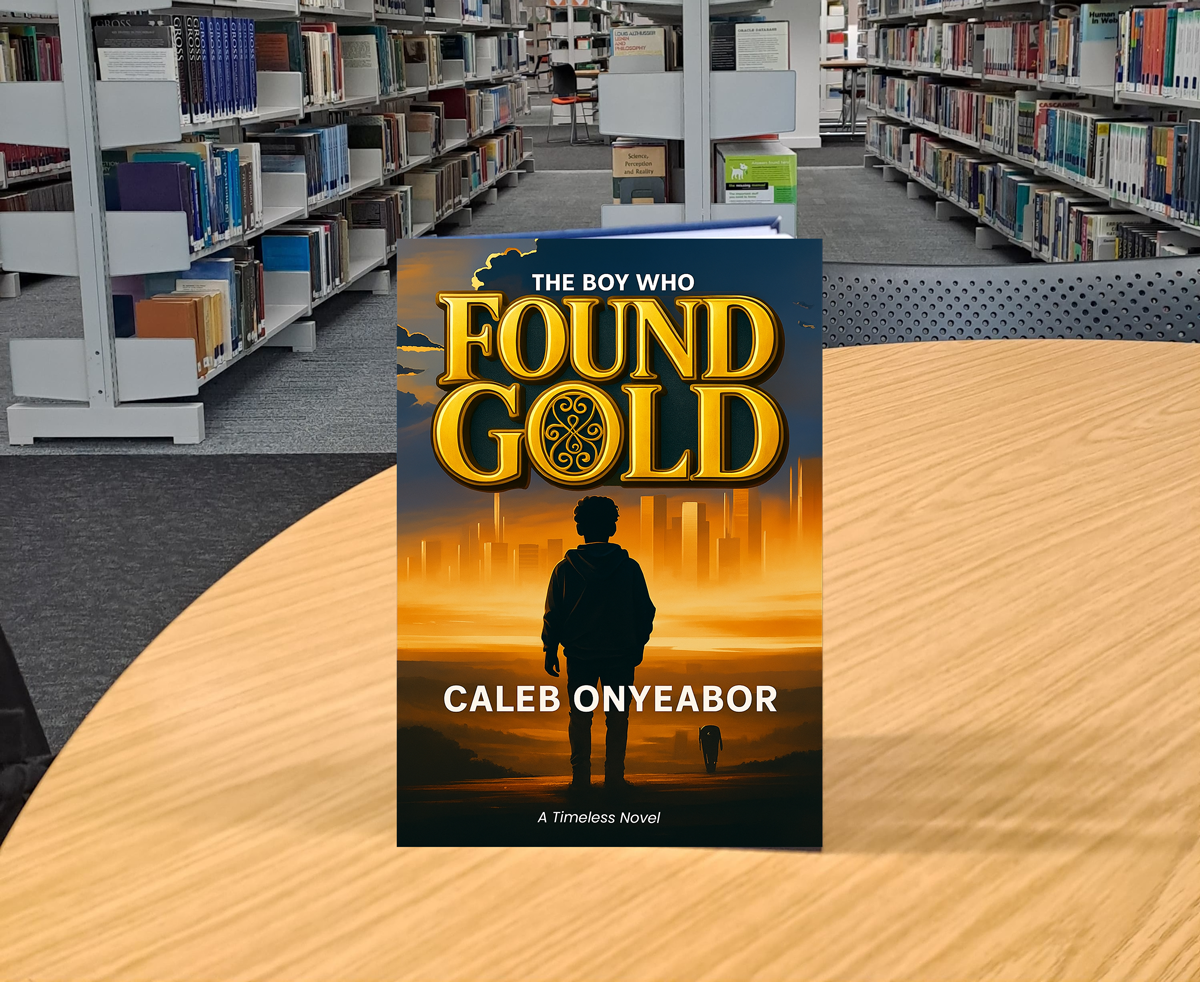
A friend gave me a copy of “The Boy Who Found Gold” by Caleb Onyeabor and asked me to read. On the front cover of the book, it was described as a “timeless novel”. This made me curious. My only goal after seeing that claim was to read and ascertain whether the book is really a timeless piece. It took me two exciting days and here is what I have found:
The novel is a debut novel of Caleb Onyeabor and I describe it as a deeply inspiring fictional narrative that creatively explores ambition, poverty, mentorship, and the pursuit of purpose and greatness. It is structured as a modern adventure with allegorical storytelling, life’s lessons, and rich cultural settings.
Storyline Summary.
The story centers around Mansur, a young boy from a ghetto who took the responsibility for his family after the death of his father and the failing health of his mother. Living in poverty, Mansur is burdened by ambition and a deep desire to escape the legacy of his father whom he saw as a failure. In the book, He is shown as one who wants more out of life, who wants to succeed, become wealthy and change the course of his destiny and by extension, his family.
Mansur’s journey begins in the ghetto where he helps his mother sell eggs and fruits, but he harbors ambitions of wealth and greatness. His longing for success leads him to Old Abe, a family friend who is an old egg vendor in the big market. Abe, known for his storytelling prowess and rich experience, becomes a vessel of inspiration and guidance for the young boy. To help the boy achieve hs dreams, Abe tells Mansur a dual-layered story that reads like a story within a story about another the early life of a historical figure called Mansa,who at that time, was a boy from ancient Timbuktu who meets another mysterious voyager known as The Preacher. Mansa, like Mansur, is filled with dreams and longing. The Preacher gives Mansa a book called “The Book of Gold” said to contain ancient truths and secrets for attaining greatness.
Old Abe follows this story with another narrative about another boy named John, from 19th-century America (based on a reimagined version of John D. Rockefeller), who faces adversity, family neglect, and poverty but eventually rises to immense wealth through persistence, hard work, and adherence to timeless principles. He too meets his own preacher who teaches him the DPA principle principle.
As a storyteller himself, Abe used these two stories to help Mansur understand that success is not a function of chance or luck, but the result of internal decisions, self-discipline, and action. Inspired by that morning encounter, Mansur begins to believe that he, too, can find his own “gold.”
At the climax of his encounter, Old Abe gives Mansur his own copy of The Book of Gold just as the Preacher gave to Mansa in his story symbolizing that he is Mansur’s own Preacher.
Following the old man’s advice to go to where his gold is, Mansur sets out for a journey to the city of gold in the other part of the country. He was joined by six other boys including a boy named Biggie at the motor park with similar ambitions.
Strengths
- Allegorical Depth: The novel is layered with allegories and metaphors, especially in the stories within the story. The diferent Preachers are like a prophetic figure who appears across timelines and geographies to bestow wisdom. The Book of Gold itself is a symbol for hidden knowledge or enlightenment that can only be accessed by those who actively seek it.
- Inspirational Storytelling: The novel’s core mission is inspirational. The writer made it clear from the beginning. Perhaps, this is what he sought to achieve with repeating punchlines like “The Boy Who will Find Gold is the Boy who goes for Gold”. It was written, as the author states in the preface, to inspire hope among young people like himself. It serves as a didactic tool disguised as fiction, ideal for both leisure and personal development.
- Cross-cultural Creativity: The narrative shifts settings between Mansur’s ghetto, ancient Mali (Timbuktu), 19th-century America, a mystic place with the god of gold and modern-day urban Nigeria. This blending of different eras and geographies adds to the universality of the lessons being conveyed, implying that the principles can be timeless and borderless.
- Vivid Descriptions The settings (particularly Mansur’s ghetto, the noisy market, the rail lines, and the streets) are painted with rich, almost cinematic detail. The language is immersive, making the ghetto come alive and giving emotional weight to the characters’ experiences.
- Symbolism and Moral Philosophy: The novel is full of parables, quotations, and moral teachings that echo historical, and philosophical wisdom. It’s a story that teaches without preaching, often using character dialogue to drive home major life principles.
- Intergenerational Wisdom Transfer: The interaction between the old (Abe, The Preacher) and the young (Mansur, Mansa, John) is a key creative element. This reflects the African oral tradition of wisdom transfer and community mentorship.
Also worth noting is the author’s unique writing style that feels raw and passionate. The credit here is that this writer is saying something new. He only found a way to tell it better, in a way that it can be better appreciated. The way he puts ancient lessons and principles into a full blown storyline is commendable. The switching, the imagery, the detailed description of ghetto life and stories, the fusion of eras and worlds, the use of stories within stories and the twist that revealed that one of the characters was indeed the storyteller’s voice in the prologue and epilogue makes it stands out.
Weaknesses
The novel is not without its flaws. Some secondary characters, like Biggie and Gebu, would have benefitted from deeper backstories. Much about them is revealed only through dialogue, and their emotional depth remains underexplored. Also, a few lines, like “The Boy Who Will Find Gold is the Boy Who Goes for Gold”, though powerful, felt slightly overused. We can say the author is guilty of overused maxims and repetitive language. Also, the book is rich in allegory, philosophy, and motivational principles. For more casual readers who expect a straightforward adventure story, the heavy layering of symbolism and abstract lessons might feel intense or slightly overbearing. There are moments where the narrative pacing feels uneven. The first few chapters are gripping and descriptive, but certain parts of the journey especially transitions between settings or scenes move too quickly or are skipped entirely.
Final Thoughts
So, is “The Boy Who Found Gold” a timeless novel?
My answer is yes.
It is more than a novel. I see it as a motivational manifesto wrapped in a coming-of-age adventure. Caleb Onyeabor’s storytelling blends layered story telling, cultural richness and deep introspection to convey known wisdom. His creativity lies not just in the story, but in how the story is told and every reader will see it as raw, passionate, immersive, and deeply resonant.
This book is for young dreamers, students, emerging leaders, and anyone struggling to rise above their circumstances. It doesn’t just tell you a story, it dares you to believe in your own. You can read more about the book here
Visit the Official Website of The Boy Who Found Gold by Caleb Onyeabor here
Subscribe to Read and Access Exclusive Contents
Join Business executives, political leaders, experts and top professionals in America, Africa and the rest of the Pan-African World who trust and read The African Times USA always.
Newsletter
Subscribe to our bi-weekly newsletter and be the first to Receive New Updates.
Your comments, ideas, and thoughts matter.
Drop us a line: